You slept seven or eight hours. You did not run a marathon. And yet by mid-morning you are reaching for coffee, by mid-afternoon you are foggy and heavy-eyed, and by evening you have nothing left for the people and things you care about. If "why am I tired all the time?" is the question you keep typing into your phone, you are in good company — and the answer is usually less mysterious than it feels.
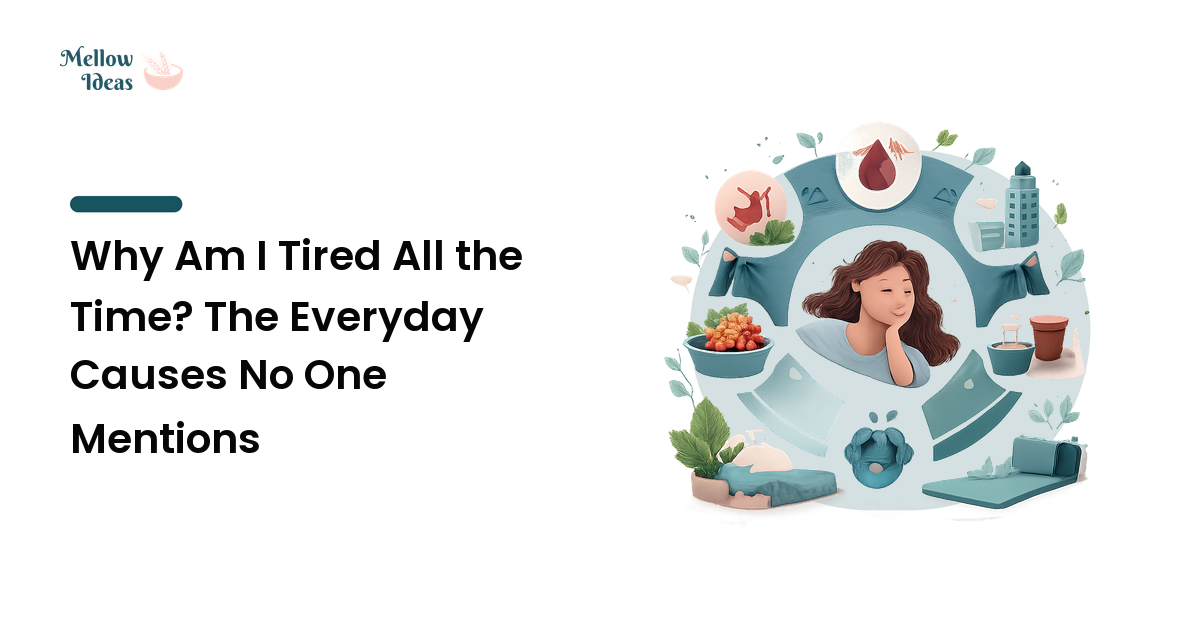
The takeaway up front: when sleep is roughly fine but your energy still is not, the cause is rarely one big thing. It is usually a handful of small, fixable drains stacking up across the day — what and when you eat, how much water you have had, how long you have been sitting, and how much your mind is carrying. Small and fixable means small fixes work. Let's walk through the everyday culprits.
A quick, honest note first: this is general wellness guidance, not medical advice. Persistent fatigue can also have real medical causes, and some deserve a doctor's attention — we cover exactly when to seek that near the end, so please do not skip it.
First, rule out the obvious: is your sleep actually as good as you think?
Before blaming your diet or your desk, be honest about sleep — because "I sleep eight hours" and "I sleep well for eight hours" are not the same thing. You can spend eight hours in bed and still wake unrefreshed if your sleep is fragmented, mistimed, or thinned by late caffeine and alcohol.
If your nights are genuinely rough — you lie awake, wake at 3am, or feel like you barely slept no matter the hours — that is the first lever to pull. Our calm, practical guide to sleeping better walks through the timing and wind-down changes that help most. But if your sleep is honestly decent and you are still dragging through the day, the cause is almost certainly downstream of bed — and that is where the rest of this guide lives.
You're running on empty: fuel, water, and blood-sugar swings
The most common hidden energy drains are about fuel, and they are easy to miss. The first is simply not eating enough, or not often enough, to power a busy day — a coffee instead of breakfast, a meeting through lunch, an "I'll eat properly tonight" that turns into a ravenous, sluggish evening. Your body and brain run on a steady supply; starve it and tiredness, irritability, and fog follow. The fix is not to eat constantly but to stop running on fumes: have something with substance in the morning, and pair protein or fiber with your carbs (eggs and toast, yogurt and fruit) for steadier energy than carbs alone. If you are dieting hard and feel wiped out, that is your body asking for more, not less.
The second drain is dehydration, which is sneakier than it sounds. You do not have to be parched to feel it — even mild dehydration is commonly linked to fatigue, low mood, and trouble concentrating — and because thirst lags behind need, you are often running low before you notice. Keep water within reach and sip through the day; if plain water bores you, herbal tea and unsweetened sparkling water count too.
The third is blood-sugar swings. A big hit of refined carbs or sugar on its own — a pastry, a sugary drink, white bread — can spike your blood sugar and then drop it, and that drop lands as a slump: tired, foggy, and craving more sugar to climb back up. This is not about fearing carbs; it is about pairing them. Carbohydrates alongside protein, fat, or fiber slow the rise and soften the crash, so fruit with a handful of nuts treats you far better than a candy bar.
The afternoon caffeine crash you're causing yourself
Caffeine is genuinely useful, but the way most of us use it can backfire into the very tiredness we are fighting. It does not create energy — it masks tiredness by blocking the brain signal (adenosine) that says you are tired. The sleepiness keeps building underneath; you just cannot feel it. When the caffeine wears off, that accumulated tiredness can arrive all at once: the classic mid-afternoon crash. Reaching for another cup restarts the cycle.
The late cup also quietly damages the night. Caffeine has a long half-life — commonly cited around five to six hours — so an afternoon coffee can still be partly active at bedtime, thinning your sleep even if you fall asleep fine. Worse sleep means more tiredness tomorrow, more caffeine, and a tighter loop.
The fix is not to quit but to use caffeine deliberately: enjoy it earlier, give yourself a cut-off in the early afternoon, and when the slump hits, try a walk, water, or a snack before defaulting to another cup. Often the crash is dehydration or low fuel wearing a caffeine costume.
You're not lazy, you're sedentary: the stillness slump
It feels backwards, but one of the biggest energy drains is not moving. Long stretches of sitting — at a desk, in the car, on the sofa — leave many people more sluggish, not more rested. Movement increases blood flow and tends to lift alertness and mood, which is why a short walk so often clears the fog better than a coffee does.
You do not need a workout to feel this; the aim is simply to break up the stillness. Get up roughly every hour to stretch, refill your water, or take a lap. And make a walk your real afternoon reset: when the slump hits, ten minutes outside — ideally in daylight — does double duty, lifting your energy now while the light helps your body clock and supports better sleep tonight. Over time, regular movement is one of the most reliable ways to raise your baseline energy. Counterintuitively, spending a little energy tends to give you more back.
The exhaustion that isn't physical: stress and mental load
Sometimes you are not physically tired at all — you are mentally spent, and it registers in the body as fatigue. Constant low-grade stress, endless decisions and notifications, and the invisible mental load of remembering everything for everyone keeps your nervous system in a low hum of "on" that wears you down even when you have barely moved.
This tiredness does not respond to a nap or a coffee; it responds to recovery — a few minutes of real quiet without a screen, a short walk to decompress, jotting down the swirling to-dos so your brain can stop rehearsing them, or protecting one small pocket of the day that asks nothing of you. Constant connectivity and doom-scrolling are stimulation, not rest. If you end most days hollowed out rather than physically tired, your energy problem may be a stress-and-recovery problem in disguise.
When to stop self-treating and talk to your doctor
The everyday causes above explain a great deal of ordinary tiredness, and the fixes are calm and within reach. But persistent fatigue is also a real medical symptom, and some causes need a professional. Please talk to your doctor if:
- Your tiredness is severe, has lasted weeks or months, or is getting worse despite genuine improvements to sleep, food, hydration, and movement.
- It comes with other symptoms — unexplained weight change, breathlessness, a persistent low mood, dizziness, or feeling exhausted out of all proportion to your day.
- You snore loudly and wake unrefreshed no matter how long you sleep, or a partner notices you stop breathing in your sleep.
- Tiredness is affecting your safety, such as drowsiness while driving.
Common, very treatable medical causes of fatigue — among others — include things like iron deficiency, thyroid issues, and sleep disorders. A simple conversation and, where appropriate, a blood test can rule these in or out. Seeking that is not an overreaction; it is the sensible next step when lifestyle changes are not enough.
Frequently asked questions
Why am I tired all the time even though I sleep enough?
Hours in bed are only part of the picture. Sleep that is fragmented or thinned by late caffeine or alcohol can leave you unrefreshed after eight hours. And much daytime tiredness comes from outside sleep entirely — under-eating, dehydration, blood-sugar swings, long stretches of sitting, and mental stress all drain energy regardless of how long you slept.
How can I get more energy without relying on caffeine?
Start with the basics caffeine only masks: a balanced breakfast, water within reach, carbs paired with protein or fat to avoid sugar crashes, and short walks to break up long sitting — ideally one in daylight in the afternoon. These address the actual causes of low energy, and unlike a late coffee they will not sabotage tonight's sleep.
Why do I crash every afternoon?
The classic crash has two ingredients: a blood-sugar dip from a carb-heavy or sugary lunch, and caffeine wearing off to unmask tiredness that was building underneath. Dehydration and hours of stillness make it worse. Try a balanced lunch, plus water and a short walk at the first sign of the slump rather than another cup.
Is being tired all the time a sign of something serious?
Usually it is the everyday drains in this guide, which respond well to small changes. But persistent fatigue can be a medical symptom too. If yours is severe, has lasted weeks or months despite real lifestyle improvements, or comes with symptoms like unexplained weight change, breathlessness, or low mood, see your doctor. Treatable causes like iron deficiency, thyroid problems, and sleep disorders are worth ruling out.
Does drinking more water really help with tiredness?
For many people, at least partly. Even mild dehydration is commonly linked to fatigue, low mood, and poor concentration, and because thirst lags behind need, you can be running low without noticing. Sipping steadily through the day is a low-effort change that often takes the edge off a slump. It will not fix tiredness rooted in poor sleep or under-eating, but it removes one common, invisible drain.
The one thing to remember
If you take a single idea from this guide, make it this: constant tiredness is usually a stack of small drains, not one big mystery. Steady fuel, enough water, carbs paired with protein, regular movement, caffeine used early, and real recovery from mental load — each is modest alone, but together they rebuild the energy that vanishing breakfasts and afternoon coffees quietly erode. Start with one, give it a week, and add the next. And if you have made the calm changes and still feel exhausted, that is exactly when a conversation with your doctor is the wise move.
Explore more calm, practical wellness guides at Mellow Ideas — from better sleep and balanced eating to building healthy habits that actually last.