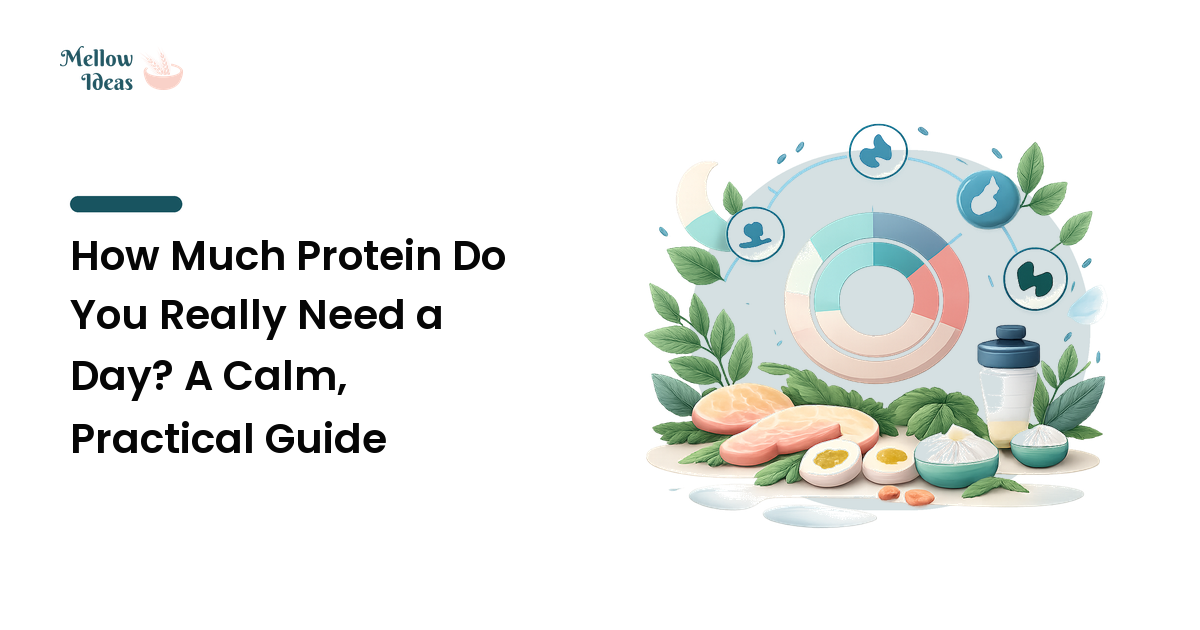
"How much protein do I need a day?" is one of the most-searched nutrition questions for good reason: protein genuinely matters, and the advice swings wildly between "you're barely trying" and "you're eating far too much." Here is the calm, honest answer up front. Most healthy adults do well somewhere between roughly 0.8 and 2.0 grams of protein per kilogram of body weight each day. The low end is the baseline for a fairly inactive person; the higher end suits people who exercise, are building or protecting muscle, losing weight, or getting older. For a lot of busy adults, the practical sweet spot sits in the middle — and, importantly, most people fall short on protein rather than overdo it.
This guide turns that range into a number you can actually use, shows which everyday foods get you there without fuss, answers whether you need powders or shakes, and covers the quiet signs you might be running low. No fad rules, no fear — just a target you can build meals around. One note before we start: this is general wellness guidance, not medical advice. If you have a kidney condition or another health issue, treat protein targets as a conversation to have with your doctor or a registered dietitian.
Why protein matters more than most diets admit
Protein is the raw material your body rebuilds itself with. Every day you repair muscle, replace cells, and produce enzymes and hormones — and protein supplies the amino acids that make all of it possible. Fall short over time and your body quietly borrows from its own muscle to cover the gap.
Two benefits stand out for everyday life. First, protein is the most filling of the three macronutrients. A meal built around it keeps you satisfied for longer, which is why a protein-rich breakfast so often beats a carb-only one for steady energy and fewer mid-morning cravings. Second, protein protects muscle — during weight loss, during busy stressful weeks, and especially as we age. From our forties onward, muscle is easier to lose and harder to rebuild, and a steady protein intake paired with some resistance movement is one of the calmest, most evidence-backed ways to stay strong and mobile for the long run.
None of this requires obsession. It just means protein deserves a deliberate spot on your plate rather than whatever is left after the pasta.
How much protein do you need a day?
The number you may have heard — 0.8 grams per kilogram of body weight — is the official baseline (the RDA). It is worth understanding what that figure actually is: the minimum to prevent deficiency in an average sedentary adult, not the amount that helps you feel and function at your best. Think of it as the floor, not the goal.
Most researchers and dietitians suggest that active people, older adults, and anyone losing weight or building muscle do better somewhere above that floor. Here is a practical way to place yourself:
| Your situation | Rough daily target |
|---|---|
| Mostly sedentary, general health | ~0.8–1.0 g/kg (0.36–0.45 g/lb) |
| Active — regular exercise or on your feet a lot | ~1.2–1.6 g/kg (0.55–0.73 g/lb) |
| Building or preserving muscle (strength training) | ~1.6–2.0 g/kg (0.73–0.91 g/lb) |
| Losing weight (to stay full and protect muscle) | ~1.6–2.0 g/kg (0.73–0.91 g/lb) |
| Older adults (roughly 50+) | toward the higher end, ~1.2–2.0 g/kg |
To calculate your own target in under a minute: take your weight in kilograms and multiply by the range that fits you. If you think in pounds, divide your weight by 2.2 to get kilograms first. For example, a 70 kg person (about 154 lb) who exercises a few times a week would aim for roughly 70 × 1.2–1.6 = about 85 to 110 grams a day. You do not need to hit a decimal point — a sensible range you can repeat most days beats a perfect number you track for a week and abandon.
One refinement worth knowing: your body uses protein best when it is spread across the day rather than crammed into dinner. Aiming for something like 20–40 grams at each of your main meals is a bit more effective for maintaining muscle than a tiny breakfast and a huge evening plate — and it keeps you fuller throughout the day too.
The best high-protein foods (and roughly how much they give you)
You can hit your target almost entirely from whole foods, which bring bonus nutrients and fiber that powders do not. Think of protein as roughly one quarter of a balanced plate — see our calm guide to healthy eating for how the rest fits together. Here are dependable options with approximate protein amounts:
- Chicken or turkey breast — about 30 g per 100 g cooked
- Fish (salmon, tuna, white fish) — about 22–25 g per 100 g cooked
- Greek yogurt, plain — about 15–17 g per single tub (170 g)
- Eggs — about 6 g each
- Lentils or beans — about 15–18 g per cooked cup
- Tofu (firm) — about 12–15 g per 100 g
- Edamame — about 17 g per cup
- Cottage cheese — about 11 g per 100 g
- Milk or soy milk — about 8 g per cup
- Nuts, seeds, or nut butter — about 6–7 g per two tablespoons
A quick checklist to make hitting your number easy without thinking hard about it:
- Anchor each meal with a protein first, then build the rest of the plate around it.
- Keep fast options on hand — eggs, plain yogurt, canned beans, canned fish, and tofu need almost no prep.
- Upgrade snacks — yogurt, a handful of nuts, edamame, or roasted chickpeas add protein where sugary snacks add none.
- Do a rough tally for a couple of days so you learn what your usual meals actually deliver. Most people are surprised by how light breakfast and lunch are.
Do you need protein powder or shakes?
Honestly? Most people do not. Protein powder is a convenience, not a requirement — a tool for closing a gap, not a health upgrade over real food. Whole foods should come first because they bring fiber, vitamins, minerals, and lasting fullness that a scoop of powder cannot match.
That said, a shake earns its place in a few situations: you have a big appetite-to-target gap and struggle to eat enough, you want something quick and portable after training, or you follow a plant-based diet and find it easier to top up with a blend. If you do use one, treat it like any packaged product — supplements are loosely regulated, so favor reputable brands with third-party testing, and remember it supplements meals rather than replacing them. There is no need to spend a fortune, and there is no magic in the powder that a chicken breast or bowl of lentils lacks.
Signs you might not be getting enough protein
These signals overlap with plenty of other causes, so treat them as a nudge to look at your plate rather than a diagnosis. You might be running low if you notice:
- Persistent hunger and snackiness, especially soon after meals — a classic sign your meals are carb-heavy and protein-light.
- Slow recovery or feeling weaker in your workouts or daily activity.
- Losing weight but also losing strength, which can mean you are shedding muscle along with fat.
- Brittle nails or thinning, lackluster hair over time.
If a few of these ring true, the fix is usually gentle: add a clear protein source to breakfast and lunch, which are the meals most people skimp on. If the symptoms are significant or persistent, that is a good moment to check in with your doctor or a dietitian, since these signs can point to other things too.
Can you eat too much protein?
For most healthy people, eating toward the higher end of the ranges above is considered safe, and there is no good evidence that a protein-rich diet harms healthy kidneys. The more realistic risks are practical: piling your plate so high with protein that vegetables, fruit, and fiber get crowded out, or assuming that more and more protein keeps paying off. It does not — beyond your body's needs, extra protein is simply used for energy or stored, with no special bonus.
The sensible approach is balance: enough protein to support your body, alongside plenty of plants and enough water. The clear exception is anyone with kidney disease or another medical condition that affects protein handling — if that is you, follow your doctor's guidance rather than a general target.
Frequently asked questions
Is 100 grams of protein a day enough?
It depends on your body weight and goals. For a smaller or less active adult, 100 grams is often plenty — even generous. For a larger person or someone training hard to build muscle, it may sit at the low end. Run the quick calculation above (your weight in kg × your range) to see where 100 grams lands for you specifically.
How much protein do I need to build muscle?
Aim for roughly 1.6–2.0 grams per kilogram of body weight, paired with regular resistance training and enough total calories to support growth. Protein supplies the building blocks, but the training is the signal that tells your body to use them — and eating far above that range does not speed things up.
Can I get enough protein on a plant-based diet?
Yes. Beans, lentils, tofu, tempeh, edamame, whole grains, nuts, and seeds can comfortably meet your needs, especially when you eat a variety of them across the day. Plant proteins are a little less concentrated than meat, so it is reasonable to aim toward the higher end of your range and to keep protein in mind at every meal rather than leaving it to chance.
Is it better to eat protein in one meal or spread it out?
Spreading it out has a slight edge for maintaining muscle — something like 20–40 grams across three or four meals is more useful than one enormous serving. That said, your total for the day matters most. If a busy schedule means an uneven spread, hitting your overall target still counts for far more than perfect timing.
Do I need protein right after a workout?
Less urgently than gym lore suggests. The old "anabolic window" is now understood to be wider and more forgiving than a frantic 30 minutes. A protein-containing meal within a few hours of training is fine for most people, and your total daily intake outweighs the exact clock time.
A calm way to hit your protein
Protein does not need to become another source of stress or a set of rigid rules. Find your rough range, anchor each meal with a real protein source, lean on whole foods first, and use powder only if it genuinely makes your life easier. That is enough to feel fuller, recover better, and protect your strength for the years ahead — no obsessive tracking required.
If this kind of steady, no-hype guidance is what you have been looking for, explore more at Mellow Ideas — where we turn overwhelming wellness advice into calm, doable steps for eating, moving, sleeping, and feeling better.