Healthy eating gets a bad reputation. Somewhere along the way it became tangled up with strict rules, expensive supplements, and the feeling that you are always doing it wrong. The truth is calmer and far more forgiving: eating well is mostly about a handful of simple, repeatable habits that you build slowly over time.
This guide skips the hype. Instead of a rigid diet, you will find a flexible framework for putting together meals you enjoy, choosing foods that genuinely nourish you, and making it all sustainable on a busy schedule. The goal is not perfection. The goal is to feel a little better, a little more often.
What "Healthy Eating" Actually Means
A useful definition of healthy eating is simple: getting enough of the nutrients your body needs, most of the time, from foods you can realistically prepare and afford. That is it. There is no single perfect diet, and no food is off-limits forever.
This matters because the diet industry often sells the opposite idea — that health depends on cutting out entire food groups or following a complicated protocol. For most people, those approaches are hard to maintain, which is exactly why they tend to fail. A pattern you can keep up with for years will always beat a strict plan you abandon in three weeks.
Throughout this guide, the emphasis is on balance and consistency over restriction. If you have a specific medical condition, food allergy, or dietary need, treat this as general guidance and talk to your doctor or a registered dietitian for advice tailored to you.
Build a Balanced Plate
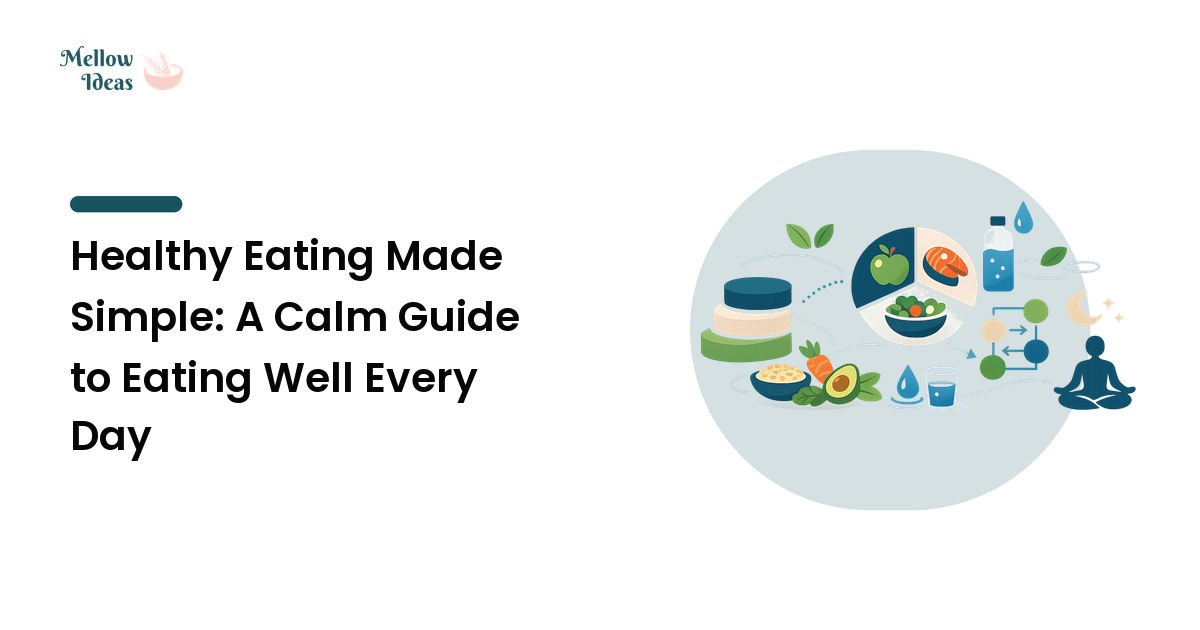
The easiest way to eat well without counting anything is to think in terms of the plate in front of you. A balanced plate gives your body steady energy and keeps you fuller for longer.
The simple plate method
A practical starting point for many meals:
- Half your plate: vegetables and fruit. These bring fiber, vitamins, and volume that helps you feel satisfied. Variety matters more than any single "superfood," so mix colors and types.
- A quarter: protein. Beans, lentils, eggs, fish, poultry, tofu, or lean meat. Protein supports muscle and helps meals feel filling.
- A quarter: whole-grain or starchy carbs. Brown rice, oats, whole-grain bread, potatoes, or quinoa for lasting energy.
- A little healthy fat. Olive oil, nuts, seeds, or avocado for flavor and nutrient absorption.
Why this works
This approach is recommended first because it is flexible and requires no special products. It adapts to nearly any cuisine, budget, or schedule, and it naturally moderates portions without strict measuring. The trade-off is that it is approximate rather than precise — which, for everyday eating, is usually a feature, not a flaw.
Choose More Whole Foods
"Whole foods" simply means foods that are close to their natural state — an apple rather than apple-flavored candy, oats rather than a frosted oat cereal. They tend to carry more fiber and nutrients and fewer added sugars and refined ingredients.
You do not need to eat exclusively whole foods to be healthy. A more realistic aim is to make whole foods your default and let convenience items fill the gaps. A few low-effort swaps:
- Whole fruit instead of fruit juice for more fiber and steadier energy.
- Plain yogurt with fruit instead of pre-sweetened cups, so you control the sugar.
- Nuts, seeds, or popcorn instead of heavily processed snacks.
- Cooking a simple meal at home a couple more nights a week than usual.
The reason to favor whole foods is straightforward: they generally deliver more nutrition per bite and keep you full longer. There is no need to be rigid about it. Frozen vegetables, canned beans, and pre-chopped produce are all genuinely healthy, convenient options.
Don't Forget Hydration
Hydration is the quiet half of eating well. Mild dehydration can leave you tired, foggy, or mistaking thirst for hunger. Water is the simplest and cheapest tool in your wellness kit.
There is no universal magic number, since needs vary with body size, activity, climate, and overall health. A reasonable, low-stress approach is to keep water within reach, drink with meals, and check the color of your urine — pale yellow usually signals you are well hydrated. Plain water is ideal, but tea, coffee in moderation, and water-rich foods like fruit and vegetables all count too. Sugary drinks are best treated as an occasional choice rather than a daily source of hydration.
Make It a Habit, Not a Project
The difference between people who eat well consistently and those who keep restarting is rarely willpower — it is systems. A few quiet strategies make healthy eating the easy choice.
Plan just enough
You do not need an elaborate meal-prep operation. Even loosely planning three or four dinners and writing a short shopping list reduces the daily "what do I eat?" decision that so often ends in takeout. Keep a few reliable, easy meals in your rotation so a tired weeknight has a default.
Stock your kitchen for success
What is in your home is what you will eat. Keeping fruit visible, vegetables prepped, and a few healthy staples on hand makes the good choice the convenient one. This is more effective than relying on motivation, which naturally rises and falls.
Expect imperfect days
Healthy eating is an average, not a daily grade. One indulgent meal does not undo your progress any more than one salad makes you healthy. The most sustainable mindset is to return to your usual habits at the next meal, without guilt. Calm consistency beats anxious perfection every time.
Frequently Asked Questions
Do I need to cut out carbs or sugar to eat healthy?
No. Whole-food carbs like oats, beans, and fruit are valuable sources of energy and fiber. The bigger opportunity is moderating added sugars and refined products, while keeping nourishing whole-food carbs in your meals. Total elimination is rarely necessary and is hard to maintain.
Is healthy eating expensive?
It does not have to be. Some of the most nutritious foods — beans, lentils, eggs, oats, frozen vegetables, and seasonal produce — are also among the most affordable. Cooking at home a little more often usually costs less than frequent takeout.
How long until I feel a difference?
It varies from person to person. Some people notice steadier energy or better digestion within a couple of weeks, while other benefits build gradually. Focus on consistency rather than a deadline, and judge progress by how you feel over time.
Are supplements necessary for a healthy diet?
For most people eating a varied diet, the majority of nutrients can come from food. Supplements can help with specific needs or deficiencies, but they are not a substitute for balanced meals. If you suspect a deficiency, ask your doctor before starting anything.
What is the single most important change to make first?
Pick one habit you can keep. For many people, adding more vegetables to meals or swapping sugary drinks for water is an easy, high-impact start. One sustainable change beats five you cannot maintain.
Eat Well, Calmly
Healthy eating does not require a perfect diet or iron discipline. It rewards a few steady habits: a balanced plate, more whole foods, enough water, and a kitchen set up to make the good choice the easy one. Start with one small change, let it settle, and add the next when you are ready.
Explore more calm, practical wellness guides at Mellow Ideas — from gentle fitness and better sleep to building healthy habits that last.